
Expressionism

Expressionism was a movement, strongest in Germany and Austria in the early 20th century, in which artists distorted form and colour to express intense inner emotion rather than depict the outside world accurately.

Historical & Social Context

Expressionism developed from around 1905 through the 1920s, a period of rapid industrial growth, urban alienation, and rising political tension in Germany and Austria that culminated in the First World War. Many Expressionists reacted against the anxieties of modern city life, war, and social change, using art to voice fear, alienation, and psychological turmoil.

Stylistic Characteristics

Distorted, exaggerated forms and proportions; harsh, often deliberately clashing colour; energetic, jagged, or angular brushwork and linework, frequently derived from the woodcut tradition that several Expressionists revived; emotionally charged, sometimes disturbing or unsettling subject matter; strong tonal contrast and a general rejection of naturalistic beauty in favour of psychological truth.

Artists

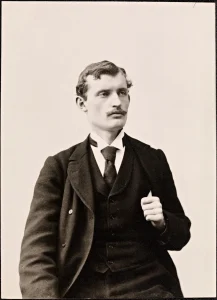
Edvard Munch

A key forerunner whose work captured anxiety and psychological distress.

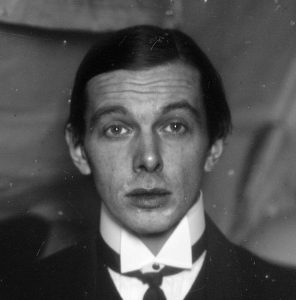
Ernst Ludwig Kirchner

A founding member of the German group Die Brücke, known for angular figures and urban alienation.

Artworks

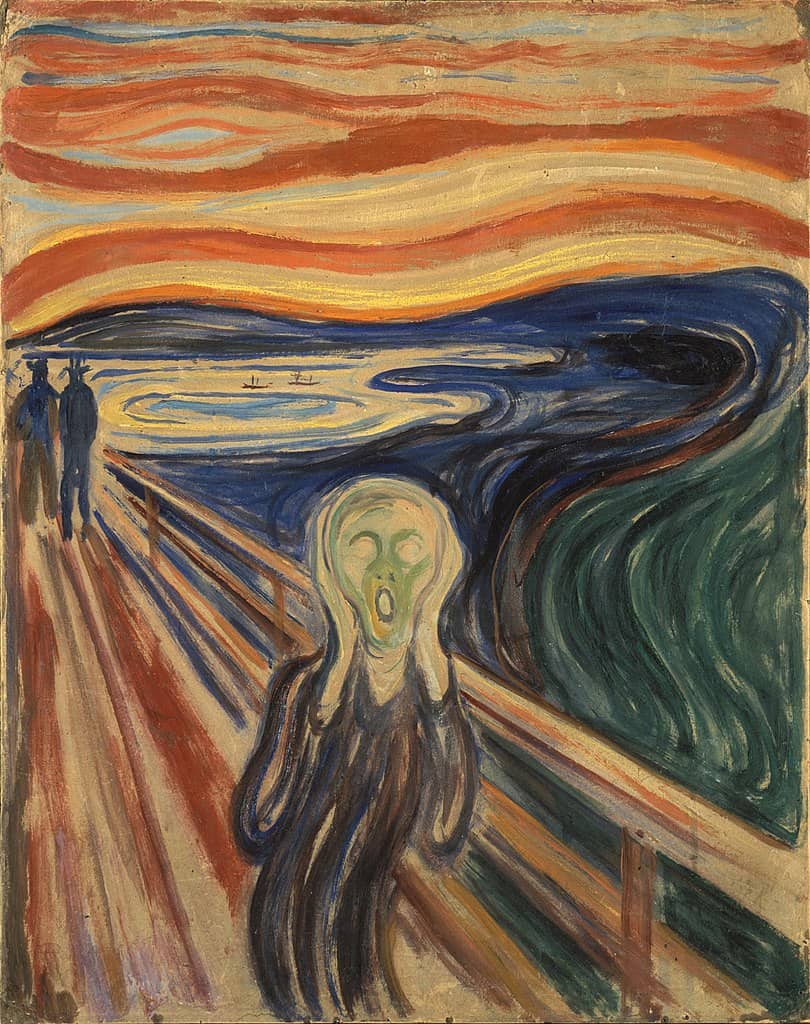
The Scream (1893) by Edvard Munch

A figure on a bridge under a swirling, blood-red sky, its distorted, wailing form expressing existential dread; Munch described the work as arising from a real sensation of anxiety he experienced while walking at sunset.


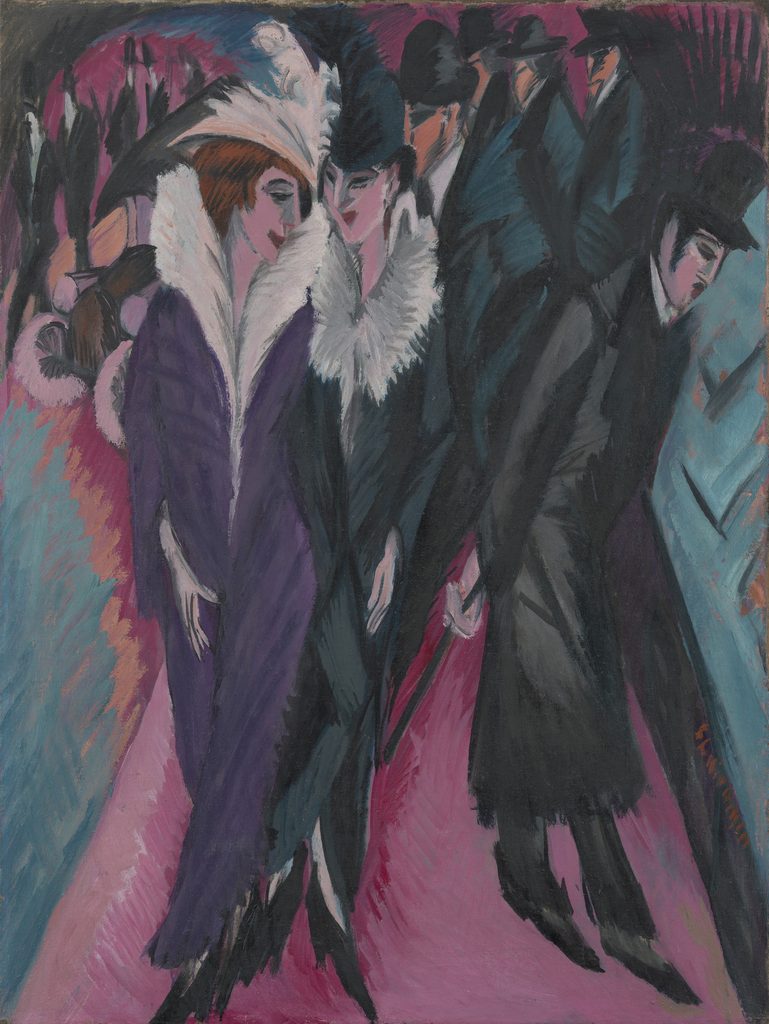
Street, Berlin (1913) by Ernst Ludwig Kirchner

Elongated, mask-like figures crowding a city street, their sharpened, angular forms conveying the unease and artificiality of modern urban life just before the outbreak of war.
Influences

Historically, the buildup to and traumatic experience of the First World War deeply shaped Expressionist imagery, shifting it from prewar anxiety about modern life to postwar horror at mechanised violence and physical destruction. Socially, rapid urbanisation and industrial city growth created widespread feelings of alienation, isolation, and dehumanisation that artists translated directly into distorted, fragmented forms. Philosophically, new ideas in psychology including early psychoanalytic theory developing in Vienna during this same period encouraged artists to explore the unconscious, the irrational, and inner emotional states rather than only the externally visible world.

Insights

Expressionism matters because it insisted that art's central job could be to show how the world feels rather than merely how it looks, a principle that continues to influence film (particularly German Expressionist cinema), illustration, and contemporary fine art dealing with trauma and emotion. What strikes me most is how the movement's tone changes so sharply across its roughly two-decade span, from the spiritual, colour-driven optimism of Der Blaue Reiter before 1914 to the bitter, disfigured realism of Otto Dix afterward, making Expressionism less a single fixed style and more a barometer of Germany's psychological state across one of its most turbulent periods.

Image Resources