

Definition: Suprematism was a Russian abstract art movement founded around 1915 by Kazimir Malevich, based on the idea that pure geometric shapes and colour — not the depiction of objects — express the “supremacy” of pure artistic feeling.

Historical and Social Context

Suprematism emerged in Russia during the turbulence leading up to and following the 1917 Russian Revolution, a time of radical political change and utopian thinking about building a completely new society. Malevich wanted to break entirely free of representing the visible world, believing art should express pure feeling and spiritual truth rather than depict objects, landscapes, or people. The movement was closely tied to the broader Russian avant-garde, and for a time was embraced as suited to a revolutionary new era, before Soviet authorities later suppressed abstract art in favour of Socialist Realism.

Stylistic Characteristics

Simple geometric shapes — squares, circles, crosses, rectangles; flat, unmodulated colour; a limited, often stark colour palette (frequently black, red, and white); non-representational, non-objective compositions; a sense of shapes floating in undefined white space.

Artists

  • Kazimir Malevich – the movement’s founder and central figure, who took abstraction to its most radical extreme.
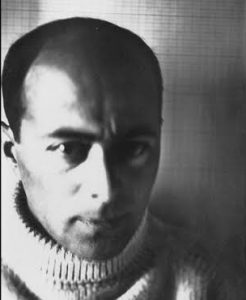
  • El Lissitzky – extended Suprematist ideas into graphic design, architecture, and propaganda art, bridging Suprematism and Constructivism.

Artworks

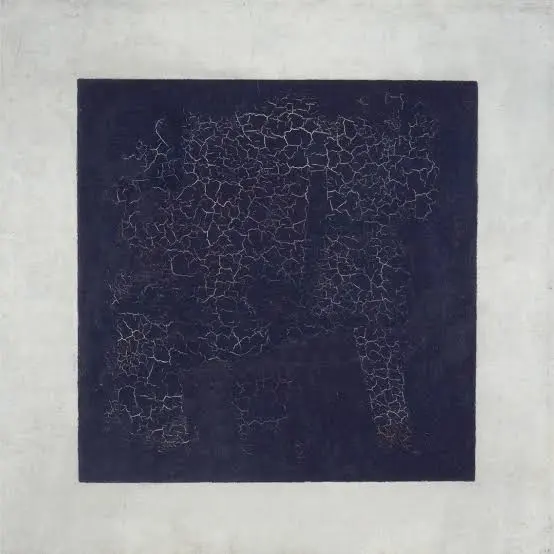
Black Square (1915) by Kazimir Malevich – a black square painted on a white canvas, intended as a “zero point” of painting, stripping art down to its most basic elements.

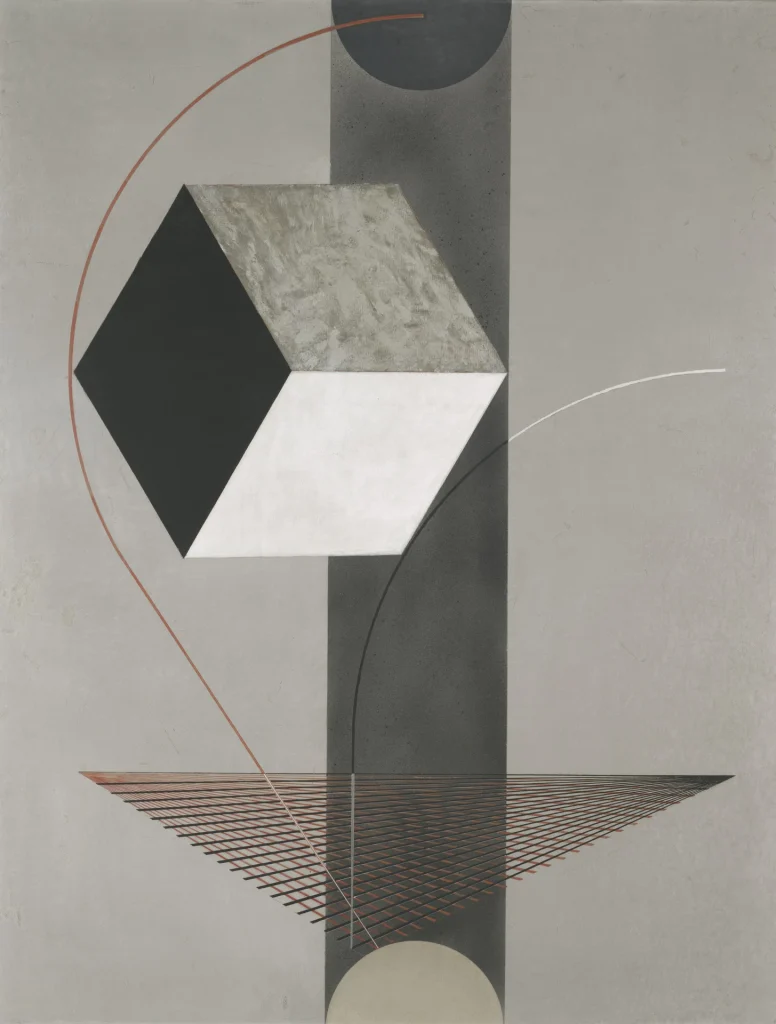
Proun 99 (c. 1923–25) by El Lissitzky – a geometric composition of floating shapes exploring space and structure, part of his “Proun” series bridging painting and architecture.
Influences

Historically and politically, the revolutionary atmosphere of early Soviet Russia encouraged artists to imagine a completely new visual language to match a completely new society. Philosophically, Malevich was influenced by ideas of spiritual purity and the notion that art could reach a “supreme” reality beyond the physical world, partly connected to mystical and theosophical thought circulating in Russia at the time. Economically and politically, state support for avant-garde art in the early Soviet period allowed the movement to flourish briefly, before later Soviet policy under Stalin suppressed abstraction in favour of state-approved Socialist Realism.

Student Insight

Suprematism matters because it pushed abstraction to its most extreme, reduced form — a single black square — showing that art could strip away everything representational and still carry deep meaning. It also shows how closely art can become tied to political history, flourishing and then being silenced as a revolution’s ideals shifted.