
Cubism

Cubism, developed mainly in Paris from around 1907, broke objects and figures into geometric, faceted forms and showed multiple viewpoints of a subject at once.

Historical & Social Context

Cubism emerged in a Europe transformed by science and technology — new theories of geometry and space, the rise of photography and cinema, and growing exposure to non-Western art through colonial trade and museum collections. Artists began questioning the centuries-old idea that a picture should show a single, fixed viewpoint, instead trying to represent objects more completely by combining several angles in one image.

Stylistic Characteristics

Fragmented, geometric forms; multiple simultaneous viewpoints; muted, often monochrome colour in early ("Analytic") Cubism; later collage elements and brighter colour in "Synthetic" Cubism; flattened, ambiguous space.

Artists

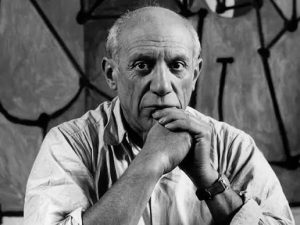
Pablo Picasso

Co-founder of the movement, constantly reinventing his approach to form.

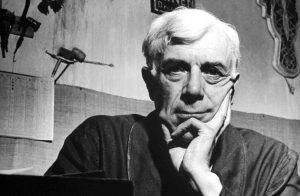
Georges Braque

Worked closely with Picasso to develop Cubist technique, especially in still life.

Artworks

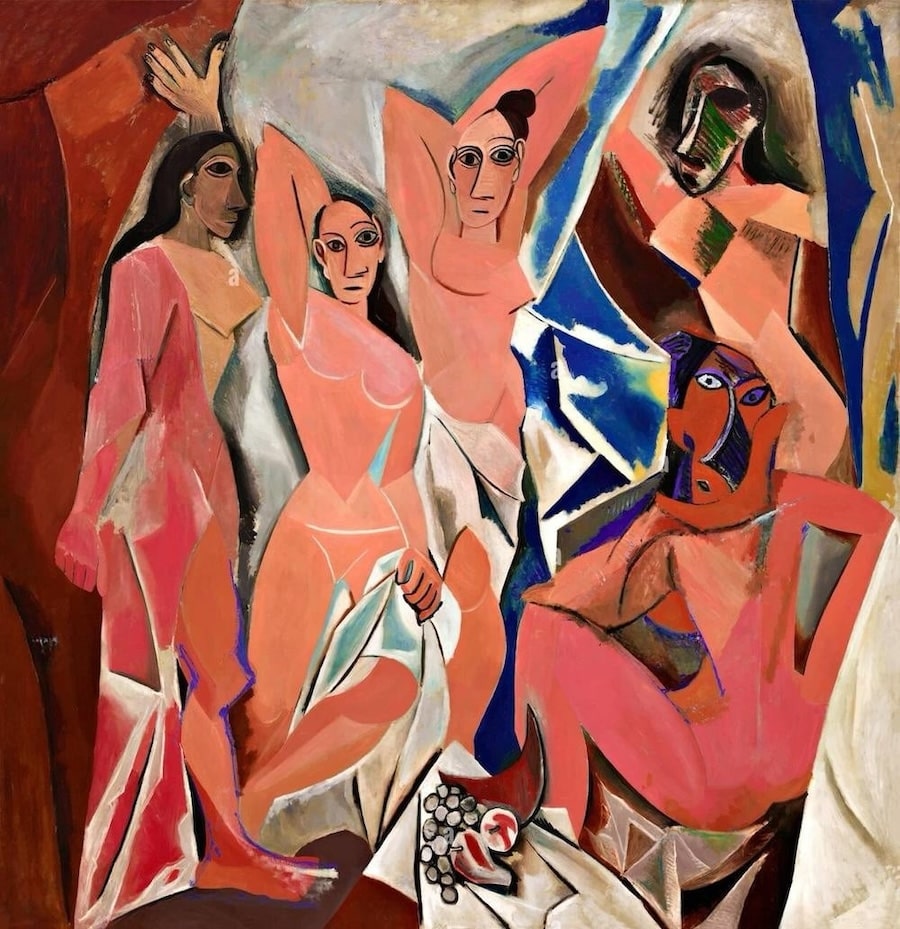
Les Demoiselles d’Avignon (1907) by Pablo Picasso

Five angular female figures with mask-like faces, widely seen as the painting that launched Cubism.


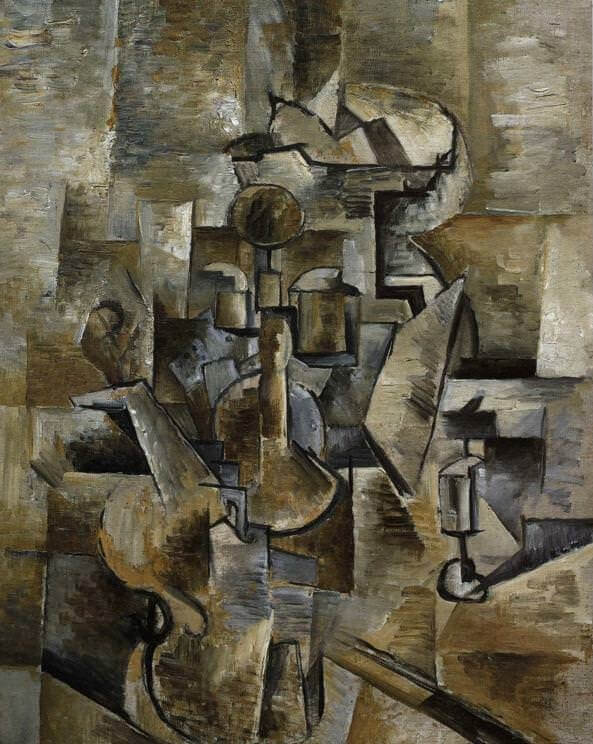
Violin and Candlestick (1910) by Georges Braque

A still life broken into overlapping geometric planes of muted brown and grey.
Influences

Stylistically, African, Iberian, and Oceanic masks and sculpture, encountered through museums and colonial-era trade, strongly shaped the simplified, angular faces in early Cubist work. Philosophically and scientifically, new ideas about relativity and multiple perspectives in physics and geometry encouraged artists to question single-viewpoint representation. Economically, private dealers and collectors in Paris supported these radical experiments, giving artists room to develop the style over several years.

Insights

Cubism matters because it broke the single-viewpoint tradition that had ruled Western art since the Renaissance, opening the way for abstraction and for the idea that a picture can represent knowledge and structure, not just appearance.