

Futurism

Futurism was an Italian movement, launched in 1909, that celebrated speed, machinery, technology, youth, and violence, aiming to break completely with the past.

Historical & Social Context

Futurism arose in a rapidly industrialising Italy, excited and unsettled by new technologies like the automobile, aeroplane, and electric lighting. Founder Filippo Tommaso Marinetti published the Futurist Manifesto in 1909, calling for the destruction of museums, libraries, and academies, which the Futurists saw as holding Italy back. The movement's glorification of speed, conflict, and modernity fed into the political climate leading up to and during the First World War, and several Futurists later aligned with Italian Fascism.

Stylistic Characteristics

Dynamic, repeated forms suggesting motion; fragmented, overlapping planes influenced by Cubism; bold diagonal lines; imagery of machines, vehicles, and urban energy; a sense of speed and simultaneity.

Artists

Umberto Boccioni

The movement's leading sculptor and painter, focused on capturing motion and dynamism.

Giacomo Balla

Known for studies of movement and light in urban and mechanical subjects.

Artworks

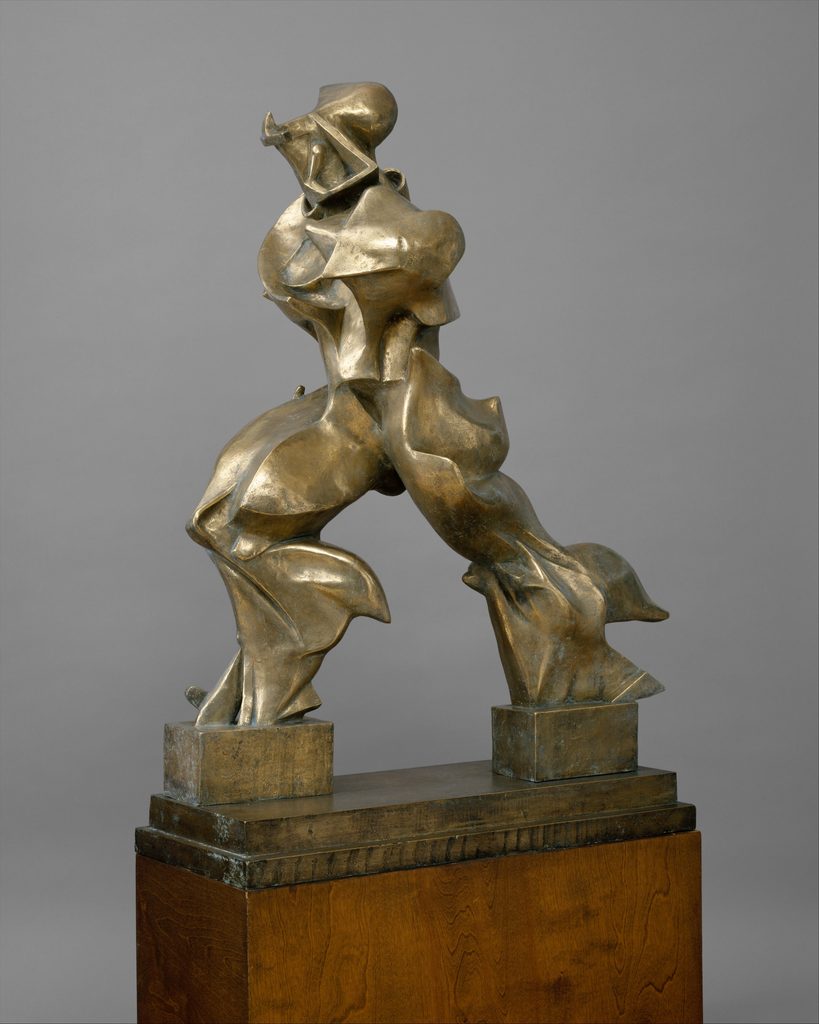
Unique Forms of Continuity in Space (1913) by Umberto Boccioni

A bronze sculpture of a striding figure whose body seems to blur and stream with motion.


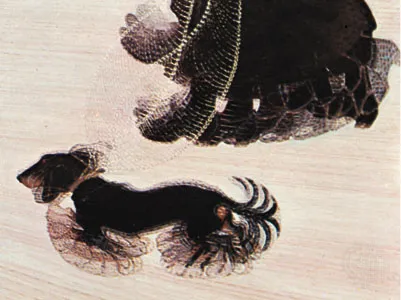
Dynamism of a Dog on a Leash (1912) by Giacomo Balla

A small dog’s legs multiplied across the canvas to show rapid movement, similar to early stop-motion photography.
Influences

Technologically, new machines — cars, aeroplanes, electric light — directly inspired Futurist subject matter and their obsession with speed. Historically and politically, Italian nationalism and the lead-up to the First World War fed the movement's aggressive, anti-traditional rhetoric. Geographically, the movement was tied closely to industrialising northern Italian cities like Milan and Turin, where factories and new transport networks were most visible.

Insights

Futurism matters because it was one of the first movements to make technology and speed themselves the subject of art, and it shows how art can be inseparable from — and even dangerously entangled with — the politics of its time.