

Pop Art

Pop Art, emerging in the mid-to-late 1950s in Britain and flourishing in 1960s America, drew its imagery from mass media, advertising, and consumer culture, often using bold colour and repetition.

Historical & Social Context

Pop Art developed during the postwar economic boom, when mass production, television, advertising, and consumer goods rapidly reshaped everyday life, especially in the United States. Artists became fascinated — and sometimes critical — of this new consumer culture, using its familiar imagery (soup cans, comic strips, celebrities, advertisements) as legitimate subject matter for fine art, a sharp contrast to the serious, emotional tone of Abstract Expressionism that came before it.

Stylistic Characteristics

Bold, flat colour; imagery borrowed directly from advertising, comics, and mass media; repetition and mechanical reproduction techniques like screen printing; a cool, ironic, or ambiguous tone toward consumer culture; sharp outlines and commercial-style presentation.

Artists

Andy Warhol

Arguably the movement's most iconic figure, famous for silkscreen prints repeating images of consumer products, celebrities, and news imagery, and for running his studio, "The Factory," almost like an actual commercial production line.

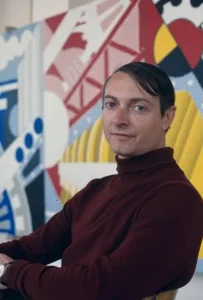
Roy Lichtenstein

Known for large paintings that mimicked comic-book panels in meticulous detail, complete with hand-painted Ben-Day dots, bold black outlines, and dramatic speech bubbles.

Artworks

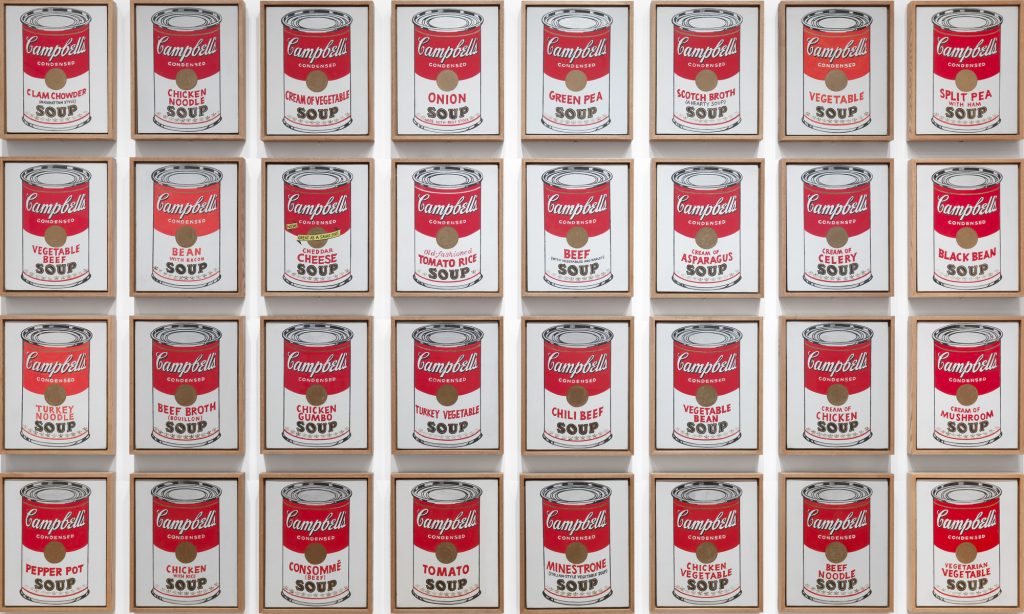
Campbell’s Soup Cans (1962) by Andy Warhol

thirty-two individual canvases, each depicting a different flavour of the same mass-produced soup can, arranged in a grid mimicking supermarket shelf display and highlighting the sameness of industrial mass production.


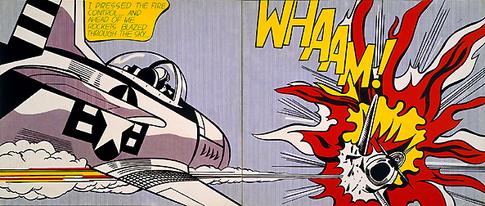
Whaam! (1963) by Roy Lichtenstein

A large, two-panel painting styled directly after a comic-book panel, showing a fighter jet firing a missile with an explosive “WHAAM!” sound effect, complete with dots and a speech bubble, blurring the line between “low” commercial art and “high” gallery art.
Influences

Economically, the postwar consumer boom and mass production of goods gave Pop artists an entirely new visual world to draw from. Socially, the spread of television and mass advertising meant shared, instantly recognisable imagery that artists could reference. Geographically, Pop Art's centres — London and New York — were also the centres of Western consumer and media culture, tying the movement directly to its environment.

Insights

Pop Art matters because it collapsed the boundary between "high art" and everyday commercial culture, arguing that a soup can or comic strip could be just as worthy of serious art as a religious painting — a shift that still shapes how we think about branding, celebrity, and art today.